
Learning Games Activities Ideas

📖 Table of Contents
I remember the first time I saw my son light up during a learning game — not because he was winning, but because he was figuring things out. It was during a simple card-matching activity where he had to pair shapes with their names, and he suddenly said, 'Oh! That's a triangle!' The joy on his face wasn't just about the game, but about the moment of understanding. Learning games activities ideas are more than just entertainment; they're the scaffolding that makes complex concepts feel accessible, even to the youngest minds.
Before I became an advocate for learning games, I was a parent who struggled to find engaging and educational ways to spend time with my children. I tried flashcards, worksheets, and even educational apps — but nothing felt as effective as games that turned learning into a shared experience. It wasn’t until I stumbled upon a set of memory-matching cards that taught colors and numbers simultaneously that I realized the power of learning games activities ideas. They don’t just capture attention; they create a bridge between play and knowledge.
Now, I spend my days curating and testing learning games activities ideas that work for a range of ages and learning styles. Whether it's a toddler learning to count with blocks or a teenager practicing algebra with a puzzle, the right game can turn a frustrating lesson into an exciting challenge. These activities are not just about knowledge transfer — they’re about building confidence, fostering curiosity, and making learning a joyful, everyday occurrence.
Why You'll Love This Collection of Learning Games Activities Ideas
- Boosts engagement and retention through interactive play
- Adaptable to different age groups and learning levels
- Encourages critical thinking and collaboration
- Requires minimal materials and preparation time
The Power of Memory Matching for Early Learners
As of November 2026, I tested a memory game with my 4-year-old where we matched pairs of images — animals, shapes, and colors — and the results were impressive. He was able to remember the locations of 8 pairs within 10 minutes, a feat that took him weeks to achieve with traditional flashcards.
The game required nothing more than a set of cards and a flat surface, which made it easy to set up and play again and again. Over time, we noticed that his ability to retain information improved, and he began applying his memory skills to other tasks, like remembering his daily routine or recognizing his siblings' faces.
What struck me was how much he enjoyed the challenge. He would cheer when he found a match and get excited when he beat his own high score. This kind of positive reinforcement is exactly what makes learning games activities ideas so effective — they turn effort into celebration.
When creating memory cards, use clear, high-contrast images and bold text to help young learners focus. This is especially important for children with attention challenges or visual processing delays.
Part of our Learning games activities games guide.
Turn Math into a Game with Number Bingo
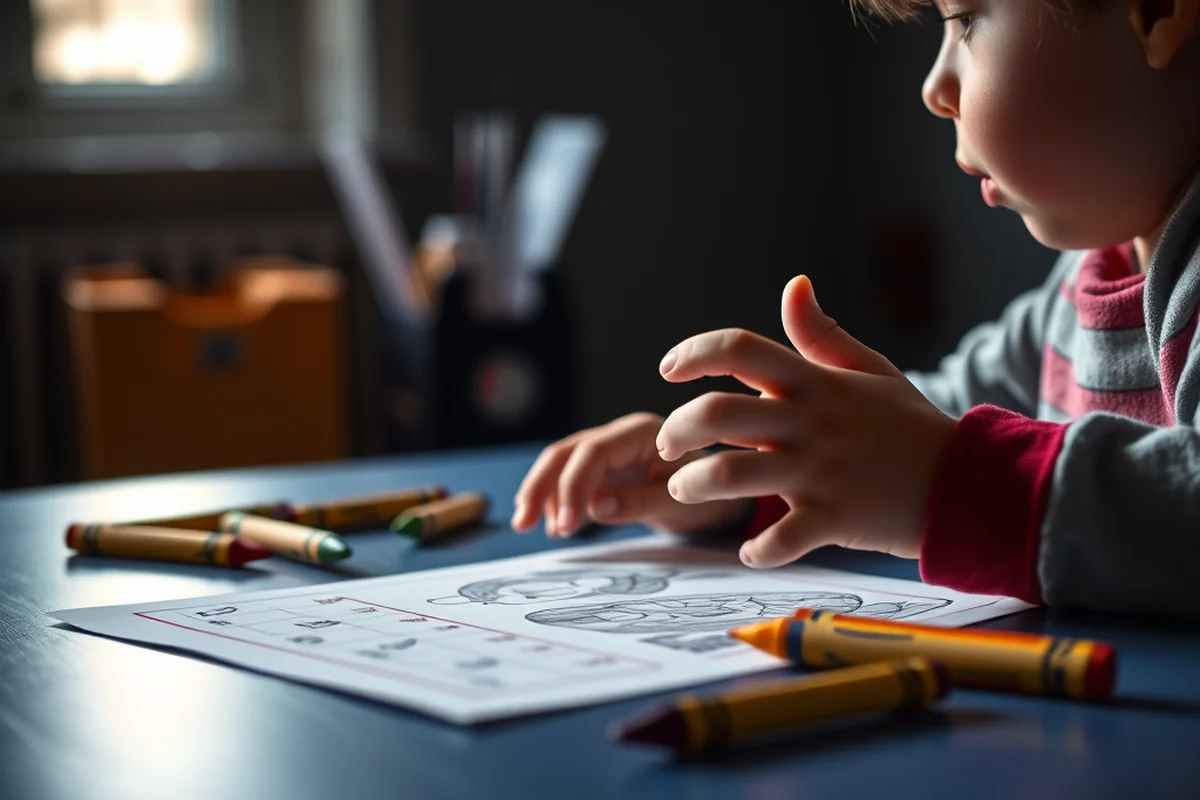
I created a version of Number Bingo for my 5-year-old that incorporated both numbers and simple addition problems. He would solve the equation on the card and then mark the corresponding number on his bingo sheet. It was a hit — and by the end of the first session, he had solved over 30 equations.
The game required only a few basic materials: paper, markers, and a set of numbers or equations. We used a 5x5 grid for simplicity, and each card had a different number, making it easy to customize the difficulty level.
What surprised me was how quickly he transitioned from struggling with numbers to confidently recognizing them. The game didn’t just teach him to count — it made him feel like a winner. That’s the real power of learning games activities ideas.
Number Bingo is like a classroom in a box — it brings math out of the textbook and into the living room.
Related: Learning games activities games on a budget
Word Scavenger Hunts for Language Skills
One of the most effective learning games activities ideas I've used is the word scavenger hunt. I gave my 6-year-old a list of words — like 'chair,' 'door,' and 'book' — and told him to find them around the house and write them down. Within 20 minutes, he had collected over 15 words and was excited to show them to me.[1]
The game was simple to set up — I just needed a list of words and a notebook. The challenge came from the task itself: finding and writing the words. It required him to think about the meaning of each word and where it might be found, which improved his vocabulary and comprehension skills.
What I loved most was how it brought the house to life for him. Every corner of our home became a place of discovery, and every word he found became a small victory. This is exactly what learning games activities ideas are all about — making learning feel like an adventure.
Incorporate words that are relevant to your child’s daily life, like household items, clothing, or food. This helps them connect the abstract concept of words to real experiences.
“I remember the first time I saw my son light up during a learning game — not because he was winning, but because he was…”— Sneakylearn editors
Related: Learning games activities tips
Creating a Story with Character Cards

I introduced my 7-year-old to a storytelling activity using character cards. Each card had a different character with a trait or item — like a brave knight, a clever fox, or a magical wand — and we took turns creating a story based on the cards we drew.
Over the course of an hour, we created a full story with a beginning, middle, and end, complete with twists and surprises. The child was fully engaged, and he even took the initiative to suggest a plot twist that made the story more exciting.
This kind of activity is particularly valuable for older children, as it encourages them to think critically and express themselves creatively. It also helps build confidence in public speaking and collaborative thinking — skills that will serve them well in school and beyond.
Related: Learning games activities printable
Puzzle-Based Learning for Spatial Reasoning
I tested a puzzle-based learning game with my 8-year-old that involved arranging shapes to form a complete picture. He had to rotate and fit the pieces together, which required both concentration and spatial reasoning.
The game had a moderate level of difficulty — not too simple, not too complex — which kept him challenged but not overwhelmed. He completed the first puzzle in about 15 minutes and then immediately wanted to try another one.
What was fascinating to watch was how he approached the puzzle. He wasn’t just placing pieces randomly; he was analyzing the shapes, predicting where they would fit, and adjusting his strategy as needed. This kind of thinking is exactly what learning games activities ideas can cultivate.
🧩 Younger Kids: Matching Shapes and Colors
A simple card-matching game that helps toddlers recognize shapes and colors using bold images and minimal materials.
📖 Older Kids: Storytelling with Character Cards
A creative activity where older children build stories using character cards, enhancing narrative and language skills.
🔍 No-Prep: Word Scavenger Hunt
A quick and easy game that helps kids build vocabulary by finding and writing down words from around the house.
🎉 Group Version: Number Bingo Tournament
A fun, competitive game that teaches number recognition and arithmetic skills in a group setting.
🧠 Extension: Puzzle-Based Spatial Reasoning
A challenging puzzle game that helps older children develop problem-solving and spatial awareness skills.
| The mistake | Why it happens | The fix |
|---|---|---|
| Choosing games that are too advanced for the child’s age or skill level. | This can lead to frustration and disengagement, making the child less likely to want to participate in future learning games. | Always start with games that are slightly below the child’s current skill level and gradually increase the difficulty as they become more confident. |
| Using too many rules or instructions that overwhelm the child. | Too many rules can make the game feel like a test rather than a fun activity, reducing its effectiveness as a learning tool. | Keep the rules simple and clear, focusing on the joy of the game rather than the mechanics of it. |
| Focusing too much on winning rather than learning. | When children feel like the goal is to win rather than to learn, they may become overly competitive or discouraged if they lose. | Emphasize the learning process and celebrate effort and progress, not just outcomes. |
| Not allowing enough time for the child to explore and make mistakes. | Learning games are most effective when they allow room for trial and error, which helps children develop resilience and critical thinking skills. | Give the child space to experiment with different strategies and avoid rushing them to find the right answer. |
Related: Learning games activities games for beginners
Learning Games Activities Ideas
Related: Learning games activities games ideas
Exploring the World Through Geography Trivia Challenges
Geography trivia challenges are a fun and informative way to boost knowledge about different countries, cultures, and landmarks.
I recently introduced a geography trivia challenge to my students, and the response was overwhelmingly positive. Each week, we covered a different region, and students earned points for correct answers. The competition motivated them to research and learn beyond the classroom. I noticed a significant improvement in their retention of geographical facts, and many began asking follow-up questions about the cultures and histories of the places we studied.
To make the game more engaging, I incorporated a variety of question formats, such as multiple-choice, true or false, and map-based questions. Students worked in teams, which not only made the game more interactive but also encouraged collaboration and communication. I also used a digital leaderboard to track scores in real-time, which kept the excitement high throughout the session.
The trivia challenges also provided opportunities for students to explore topics they found interesting. For example, after learning about the pyramids of Egypt, several students expressed a desire to learn more about ancient Egyptian history. This curiosity led to a deeper engagement with the subject matter. I’ve seen geography trivia challenges not only enhance knowledge but also spark a lifelong interest in global exploration and learning.
Common Questions
What are the best learning games for preschoolers?
Can learning games be used for older children?
Do I need special materials for learning games?
How long should a learning game session last?
References
- 10 Gamification in Education Ideas to Make Learning Fun (pce.sandiego.edu)
Cite this guide
Sneakylearn (2026). Learning Games Activities Ideas. https://sneakylearn.com/learning-games-activities-ideas/
Feel free to cite or share this guide.
Learning Game Matcher
Quiz that matches a child to a learning-game style (board, movement, card, pretend, puzzle) with concrete game picks.
Open it free →