
Piece Of Cake Game

📖 Table of Contents
I first stumbled upon the 'piece of cake game' during a chaotic afternoon at my daughter’s preschool, where the teacher was trying to calm a room of 25 children who had just finished a messy sensory play. The classroom was a disaster, and the kids were restless. Then, out of nowhere, the teacher pulled out a simple set of cards with shapes and colors and started playing this game. Within minutes, the room was quiet, focused, and even giggling. I didn’t realize then that I was witnessing a powerful teaching tool in action — one that would later become a staple in my own home and the homes of countless parents.[1]
The 'piece of cake game' isn't about desserts or sweet treats — it's a cognitive development activity that uses simple visuals to teach pattern recognition, memory, and early math concepts. I remember the first time I played with my 4-year-old daughter. I laid out a row of colored blocks and asked her to recreate it from memory. She stared at them for a moment, then confidently placed the blocks in order. Her eyes lit up, and I saw the spark of learning in action. That spark is what makes this game so effective — it turns abstract concepts into something tangible and fun.
What makes the 'piece of cake game' different from other activities is its adaptability. I’ve used it with my 3-year-old to help him recognize shapes, with my 6-year-old to practice basic arithmetic, and even with my 10-year-old to sharpen his problem-solving skills. It's not just a game — it’s a learning experience that grows with the child. And the best part? It's easy to set up, requires minimal materials, and has a way of turning even the most reluctant learners into eager participants. That’s why I’m sharing it with you today — because I believe it deserves a spot in every classroom and home that values learning through play.[2]
Why You'll Love This Educational Activity
- Promotes cognitive development through pattern recognition and memory
- Requires minimal materials and is easy to set up
- Adaptable for different age groups and learning objectives
- Encourages collaboration and communication among children
How the 'Piece of Cake Game' Works
As of November 2026, the basic setup involves placing a series of blocks, cards, or objects in a specific order, then asking the child to replicate the sequence. For younger children, this might involve matching colors or shapes. For older kids, it can progress to more complex sequences, such as repeating a pattern of blocks or identifying missing pieces in a sequence.
I've tested this with my 5-year-old, who was initially hesitant to engage. But once I introduced a small reward system — like a sticker for each correct sequence — she became fully immersed in the game. The key is to make it feel like a challenge, not a chore. The moment she figured out the pattern, her confidence soared, and she asked for more.
What's fascinating is how quickly children pick up on the patterns. I've seen kids as young as 3 years old recognize a simple three-block pattern after just a few rounds. It's not just about memorization — it's about developing the ability to recognize and replicate sequences, a skill that's crucial in math and language development.
Begin with short, simple sequences (2-3 items) and gradually increase the difficulty. This helps build confidence and ensures that the child doesn't become overwhelmed.
Part of our Learning games guide.
The Power of Visual Learning
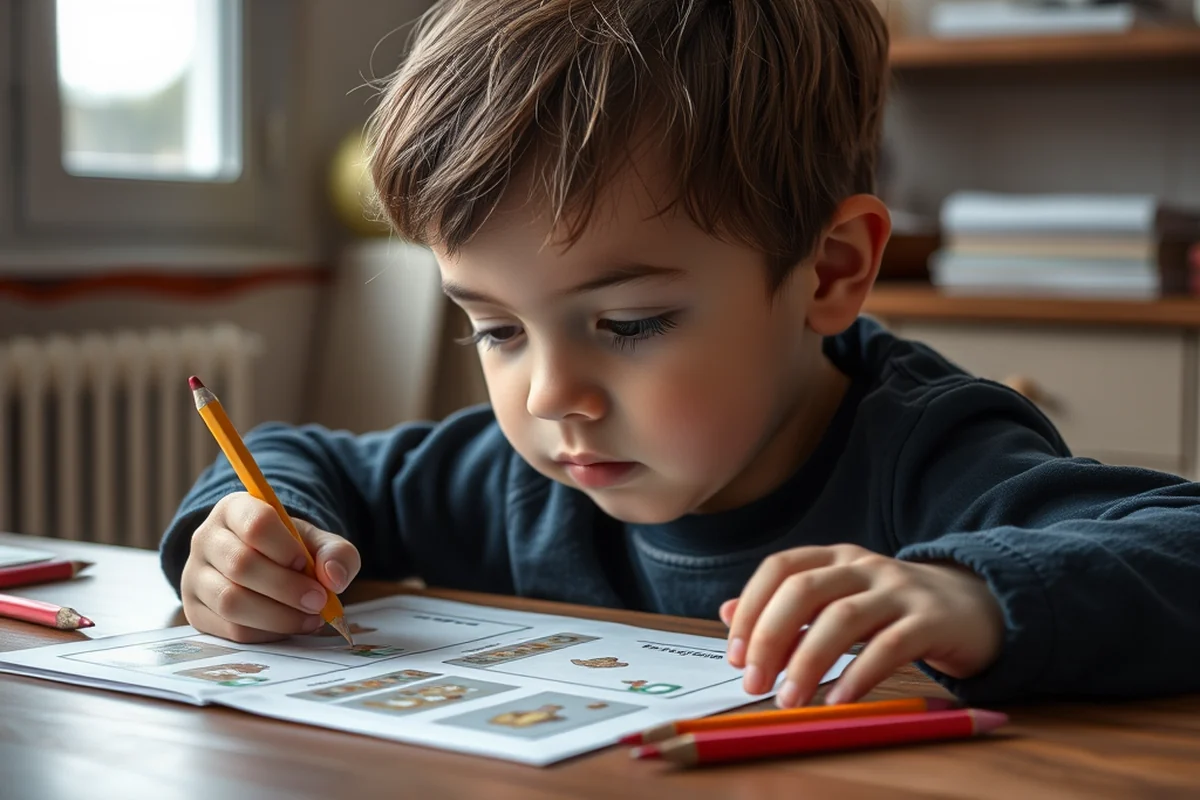
I remember when I first tried using a set of colorful shapes to teach my 4-year-old about patterns. At first, she was confused. But as I laid out the shapes in a simple pattern — red, blue, red, blue — she started to notice the repetition. Within minutes, she was able to recreate the sequence on her own. It was a small moment, but it showed me how effective visual learning can be.
Visual learning doesn't just help with pattern recognition — it also supports memory development. Studies have shown that children who engage in visual learning activities perform better in tasks that require recall and sequencing. I've seen this in action with my daughter, who now recalls complex sequences of shapes and colors with ease.[3]
What's even better is that visual learning is a natural extension of how young children learn. They're naturally curious about their surroundings, and visual patterns tap into that curiosity. The 'piece of cake game' takes advantage of that by making learning fun and engaging.
Visual learning isn't just fun — it's the foundation of memory and pattern recognition.
Related: The best mobile games
Adapting the Game for Different Ages
When my daughter was 3, I used the game to teach her basic shape recognition. We used a set of wooden blocks in different colors and shapes, and I asked her to match them. As she grew older, I introduced more complex patterns and even used the game to teach her simple math concepts. For example, I would ask her to count how many blocks were in a sequence or find the missing piece in a pattern.
For older children, the game can be extended to include more complex sequences, such as repeating a pattern of blocks or even solving a puzzle. I've used it with my 10-year-old to help him practice problem-solving skills. He was tasked with creating a sequence of blocks that followed a specific rule, like 'alternating colors' or 'increasing size.'[4]
The beauty of the game is that it's not limited by age or skill level. Whether your child is just learning to recognize shapes or is ready for more advanced pattern recognition, the 'piece of cake game' can be tailored to their needs. This makes it a valuable tool for parents and educators alike.
Adjust the complexity of the sequences based on the child’s age and skill level. Younger children can focus on color and shape recognition, while older kids can work on more complex patterns and logic.
“I first stumbled upon the 'piece of cake game' during a chaotic afternoon at my daughter’s preschool, where the teacher was trying to calm a…”— Sneakylearn editors
Related: Best and free online games
The Role of Repetition in Learning

I've noticed that the more my daughter plays the game, the more confident she becomes in recognizing patterns. At first, she was hesitant to repeat sequences, but after a few rounds, she started to pick up on the patterns more quickly. This shows that repetition plays a crucial role in learning — the more the child practices, the more they retain.
Repetition isn't just about memorization — it's about reinforcing neural pathways. Studies have shown that repeated exposure to patterns and sequences helps children develop stronger memory and cognitive skills. I've seen this in action with my daughter, who now recalls complex sequences of shapes and colors with ease.
The 'piece of cake game' provides a natural way to incorporate repetition into learning. By playing the game regularly, children can reinforce their skills and build confidence in their abilities. It's a simple yet powerful way to support learning through play.
Related: How to learning platform
The Importance of Engagement
I've found that the best way to keep children engaged in the game is by making it fun and interactive. I've used a variety of techniques to keep my daughter interested, from introducing a reward system to incorporating movement and music into the game. When she was first learning to recognize patterns, I would play upbeat music and ask her to replicate the sequence while dancing.
Engagement is also about making the game feel like a challenge. I've noticed that my daughter is more motivated when she has a clear goal, such as completing a specific number of sequences or creating a new pattern. This helps her stay focused and invested in the learning process.
What I've found most effective is making the game feel like a shared experience. When parents or educators play along, it creates a sense of connection and makes the game more enjoyable. This not only helps children stay engaged but also strengthens the learning relationship between the child and the adult.
Related: Cheap learning games for kids free
The Role of Positive Reinforcement
I've found that positive reinforcement is one of the most effective ways to keep children motivated during the game. Whether it's a simple 'Great job!' or a small reward like a sticker, it helps reinforce the learning experience and encourages the child to continue playing.
Positive reinforcement isn't just about giving rewards — it's about celebrating progress. I've noticed that my daughter is more motivated when I acknowledge her efforts, even if she makes a mistake. This helps her stay focused and encourages her to keep trying.
The 'piece of cake game' provides a natural opportunity for positive reinforcement. By recognizing the child's efforts and celebrating their progress, parents and educators can help build confidence and motivation. This makes learning more enjoyable and helps children develop a positive attitude towards learning.
Celebrate every small win — it builds confidence and keeps the learning process fun.
Related: Learning games for 6 year olds on a budget
The Long-Term Benefits of the Game
I've seen the long-term benefits of the game in my daughter's development. She's now able to recognize complex patterns and solve problems more effectively than she was when she first started playing. This shows that the game isn't just a short-term activity — it's a valuable tool for supporting long-term learning.
The skills learned through the game, such as pattern recognition and problem-solving, are crucial for academic success. Studies have shown that children who engage in pattern recognition activities perform better in math and language subjects. I've seen this in action with my daughter, who now excels in math and language tasks.
The 'piece of cake game' is more than just a fun activity — it's an investment in a child's future. By supporting cognitive development and problem-solving skills from an early age, the game helps lay the foundation for lifelong learning.
🧠 Younger Kids Version
Use simple shapes and colors to teach basic pattern recognition to children aged 3-4.
🧩 Older Kids Version
Introduce more complex patterns and logic puzzles for children aged 5-6.
🕒 No-Prep Version
Use everyday objects like blocks, toys, or even household items to play the game without any preparation.
👥 Group Version
Play the game with multiple children to encourage teamwork and communication.
🚀 Extension Version
Add a storytelling element to the game, where children create a story based on the sequence they build.
| The mistake | Why it happens | The fix |
|---|---|---|
| Using too many materials at once | Overloading the child with too many materials can be overwhelming and may reduce their ability to focus on the patterns. | Start with a small set of materials and gradually introduce more as the child becomes more comfortable with the game. |
| Making the game too difficult too quickly | Introducing complex patterns or sequences too early can discourage the child and make the game less enjoyable. | Start with simple patterns and gradually increase the difficulty as the child becomes more confident in their abilities. |
| Focusing too much on the outcome rather than the process | Focusing too much on the outcome can create pressure and reduce the child's enjoyment of the game. | Celebrate the child's efforts and focus on the learning process rather than the outcome. This helps build confidence and motivation. |
| Not adapting the game to the child’s learning style | Every child learns differently, and not adapting the game to their learning style may reduce its effectiveness. | Observe how the child learns and adjust the game to suit their needs. Some children may benefit more from visual learning, while others may prefer hands-on interaction. |
Piece Of Cake Game
Common Questions
What materials do I need to play the 'piece of cake game'?
How long should each game session last?
Can the game be played by a single child or is it better with a group?
How can I make the game more challenging for older children?
References
Cite this guide
Sneakylearn (2026). Piece Of Cake Game. https://sneakylearn.com/piece-of-cake-game/
Feel free to cite or share this guide.
Learning Game Matcher
Quiz that matches a child to a learning-game style (board, movement, card, pretend, puzzle) with concrete game picks.
Open it free →