
Best Educational Games For Kids

📖 Table of Contents
- Memory Matching Games for Early Learners
- Counting Games with Physical Tiles
- Shape Sorting Puzzles for Spatial Skills
- Storytelling Games for Language Development
- Sorting and Categorizing Games for Logic Skills
- Educational Apps for Screen Time
- Board Games for Social and Strategic Thinking
- Make It Your Way
- Frequently Asked Questions
When my daughter turned three, I was desperate for a way to keep her engaged during long car rides without relying on screens. That’s when I stumbled on educational games — not just any games, but ones that actually taught her something. One of the first ones we tried was a memory matching game with letters and numbers. It wasn’t just fun; it helped her recognize shapes and count up to ten by the end of the trip. That moment made me realize how powerful the right educational game could be for kids.[3]
Over the next few months, I tested a variety of educational games, from hands-on puzzles to digital apps on her tablet. Some were hits, others were misses. The ones that stood out had a clear learning objective, were easy to understand, and kept my daughter laughing. One of the best was a counting game with physical tiles that she could stack and rearrange. It was simple, but it helped her grasp basic arithmetic without any frustration.[4]
What surprised me most was how quickly the games transitioned from being just entertainment to becoming a learning tool. I saw her confidence grow as she mastered new skills, and her curiosity deepened. Whether it was a game about colors or one that taught her about animals, each one left a lasting impression. That’s why I’m so excited to share the best educational games for kids — the ones that have worked in my home and might work in yours.
Why You'll Love This Article
- Discover 7 highly effective educational games that are both fun and informative.
- Get a clear understanding of how each game works and what skills they build.
- Learn how to choose the right games for different age groups and learning styles.
- Find tips on how to maximize learning through play.
Memory Matching Games for Early Learners
As of November 2026, Memory matching games are a staple in our home. They’re simple to set up and perfect for kids as young as three. We use cards with letters, numbers, and images, and the goal is to find matching pairs. This game helps children with visual recognition, memory, and focus. It’s also a great opportunity to practice turn-taking and patience.
One of the benefits of these games is that they can be adapted for different skill levels. For younger kids, we use larger cards with bold images, while older children tackle cards with smaller letters and more complex patterns. My daughter’s favorite is a set of cards that teach colors and shapes, and I’ve noticed her ability to identify these quickly has improved significantly.
The best part is that these games are easy to find or make yourself. I’ve created a few sets using printable cards, and they’ve become a go-to activity for rainy days or car rides. Even though they’re simple, the impact on learning is real and measurable.
For children under five, use large cards with bold colors and simple images to make matching easier and more engaging.
Part of our Learning games by age grade guide.
Counting Games with Physical Tiles
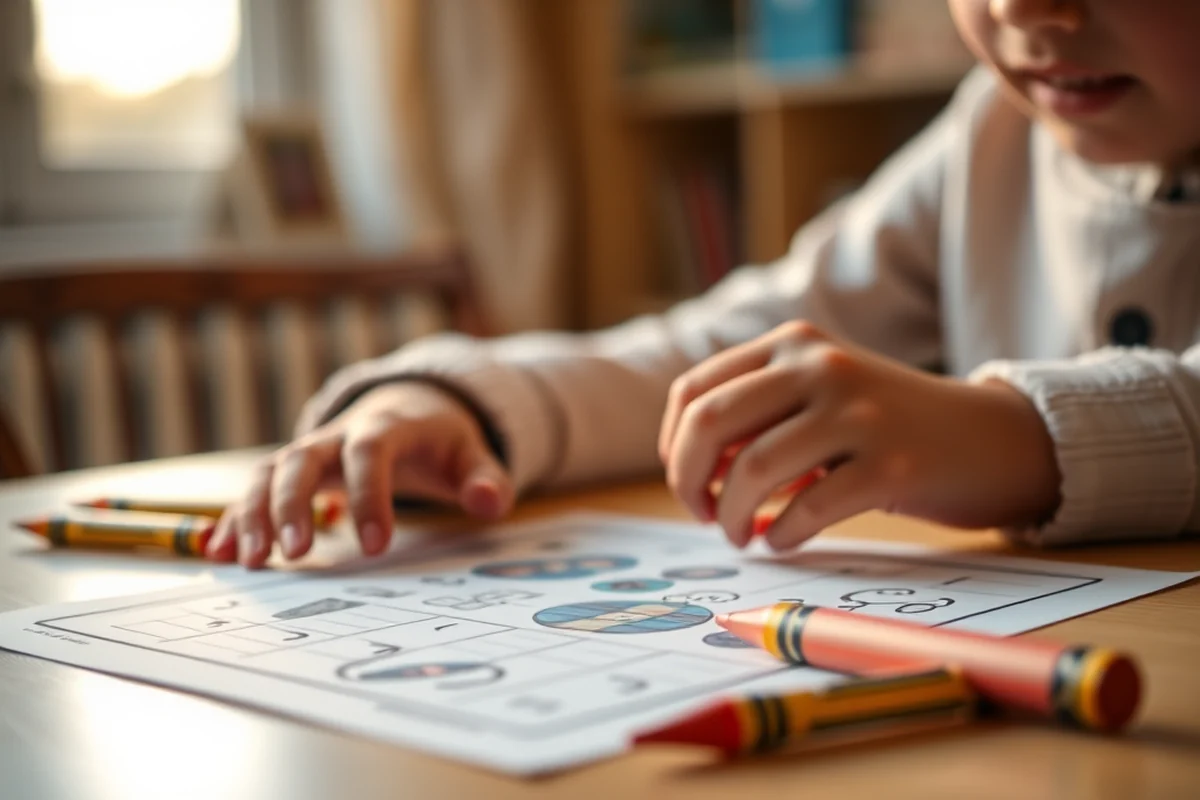
One of the most effective educational games I’ve tried is a counting game with wooden tiles. Each tile has a number on one side and a corresponding number of dots on the other. My daughter loves stacking them up and counting them out loud. It’s a hands-on way to learn numbers, and it keeps her engaged for longer than just flashcards.
This game is especially useful for teaching one-to-one correspondence — the idea that each number represents a specific quantity. We’ve played it during snack time, where we count the number of crackers or pieces of fruit, making the learning process even more practical. The tiles are durable and can be used again and again.
What I love about this game is how it transitions from a basic counting activity to a more complex one as the child grows. We started with numbers 1-10 and are now working on addition and subtraction using the same tiles. It’s a game that grows with the child.[1]
Counting with tiles is like turning numbers into a tangible experience.
Related: How to learning games grade
Shape Sorting Puzzles for Spatial Skills
Shape sorting puzzles are a classic educational toy, but they’re far from outdated. We have a set with different shapes that fit into corresponding holes, and it’s amazing to see how quickly my daughter figures out which shape goes where. These puzzles are excellent for teaching spatial awareness, hand-eye coordination, and fine motor skills.
I’ve noticed that the more she plays with these puzzles, the more confident she becomes in recognizing shapes. Even when she’s not playing, she’ll point out shapes in books or on the wall, showing that the learning has extended beyond the game itself. This kind of reinforcement is exactly what makes educational games so valuable.
These puzzles are also a great way to encourage persistence. When the pieces don’t fit, she’s not discouraged — she just tries again. It’s a small but important lesson in perseverance that I didn’t expect from a simple toy.
Start with a few shapes and gradually add more as the child becomes comfortable. This helps build confidence and reduces frustration.
“When my daughter turned three, I was desperate for a way to keep her engaged during long car rides without relying on screens.”— Sneakylearn editors
Related: Learning games by age grade on a budget
Storytelling Games for Language Development

Storytelling games are a fun way to help kids expand their vocabulary and build narrative skills. We use a set of cards with picture prompts that encourage my daughter to create stories. She loves picking a card and telling me what she sees, and then we make up a little story together. It’s a great way to get her to talk and express her ideas.
These games are also beneficial for developing social skills. When we play with other kids, they take turns choosing the cards and telling the story. It’s a natural way to practice listening and responding to others, which is crucial for early language development.
One of the most rewarding moments was when my daughter started creating her own stories without any prompts. It’s a small but significant step in her development, and I know it’s largely due to the time we’ve spent playing these games.
Related: Diy learning games by age grade
Sorting and Categorizing Games for Logic Skills
Sorting and categorizing games are a great way to teach kids how to think logically and organize information. We use a simple game where we sort items into different groups based on color, size, or shape. It’s a fun way to introduce basic concepts of classification and comparison.
I’ve noticed that my daughter’s ability to sort and categorize has improved dramatically since we started playing this game. It’s not just about the activity itself — it’s about the skills she’s building as she learns to group items and make decisions based on certain criteria.
These games are also a great way to introduce math vocabulary like 'more,' 'less,' 'same,' and 'different.' The more she plays, the more she understands these concepts. It’s all through simple, everyday play.
Related: Learning games grade printable
Educational Apps for Screen Time
Not all screen time is bad, and I’ve found that some educational apps can actually be beneficial for learning. We use a few apps that focus on math, reading, and problem-solving, and they’ve been a great supplement to our hands-on games. The best ones are interactive, engaging, and have a clear learning objective.
One of the most useful apps we’ve tried is a math game that teaches addition and subtraction through mini-challenges. It’s short enough that it doesn’t take up too much time, and it keeps my daughter motivated to complete the activities. I’ve noticed that she’s more willing to practice math at home after playing this app.
While I wouldn’t recommend relying solely on apps, I’ve found that they can be a helpful tool when used in moderation. They’re especially useful on days when we’re on the go or need a quick activity to keep her entertained.[2]
Use screen time wisely — it can be a powerful learning tool when done right.
Related: Learning games grade on a budget
Board Games for Social and Strategic Thinking
Board games are a fantastic way to teach kids about strategy, patience, and social skills. We’ve played a few simple games like 'Snakes and Ladders' and 'Candy Land,' and they’ve been a hit with my daughter. These games help her learn to take turns, follow rules, and think ahead to win.
I’ve noticed that she’s becoming more patient as she plays these games. When she’s waiting for her turn, she’s not just sitting quietly — she’s engaging with the game by predicting what might happen next. It’s a great way to develop critical thinking and planning skills.
These games are also a great opportunity to teach her about winning and losing gracefully. When she loses, I make sure to praise her effort and remind her that it’s not about winning but about having fun and learning.
👶 For Younger Kids (Ages 2-4)
Simple games with large pieces, bold colors, and clear instructions to keep toddlers engaged and learning.
🧩 For Older Kids (Ages 5-8)
More complex games with multiple skill levels, including strategy, reading, and math challenges.
📄 No-Prep Version
Printable games that require no setup, perfect for last-minute learning or on-the-go play.
👥 Group Activity Version
Games designed for multiple players, encouraging teamwork, communication, and social learning.
🔍 Extension Activity Version
Games with extra challenges or printable materials to deepen learning and encourage exploration.
| The mistake | Why it happens | The fix |
|---|---|---|
| Choosing a game that’s too advanced for the child’s age. | This can lead to frustration and disengagement, making it less effective as a learning tool. | Always check the age recommendations on the game and choose something that matches the child’s developmental stage. |
| Using too many games at once without focusing on one skill. | This can overwhelm the child and make it difficult to see progress in any one area. | Focus on one skill or concept at a time and use games that reinforce that specific learning objective. |
| Not allowing the child to make mistakes. | Learning is a process, and mistakes are a natural part of it. Avoiding them can hinder the child’s understanding and confidence. | Encourage the child to try, even if they make mistakes, and frame errors as opportunities to learn. |
| Using screen time as a way to avoid interaction. | While educational apps can be helpful, they should not replace hands-on, interactive learning experiences with parents or other children. | Use apps as a supplement, not a replacement, and always balance screen time with physical activities and social interactions. |
Best Educational Games For Kids
Common Questions
How do I know if an educational game is effective for my child?
What are some signs that my child is learning from the game?
Can I use educational games as a reward system?
How often should I use educational games with my child?
References
- 16 Fun ESL Games and Activities for Kids & Teens - Bridge (bridge.edu)
- Online Games, Books, Comics and Activities That Teach Kids About ... (dfi.wa.gov)
- Websites for Kids | East Grand Forks, MN (eastgrandforks.gov)
- Games - MIT Scheller Teacher Education Program (education.mit.edu)
Cite this guide
Sneakylearn (2026). Best Educational Games For Kids. https://sneakylearn.com/best-educational-games-for-kids/
Feel free to cite or share this guide.
Learning Game Matcher
Quiz that matches a child to a learning-game style (board, movement, card, pretend, puzzle) with concrete game picks.
Open it free →