
Car Crash Games
📖 Table of Contents
- What Are Car Crash Games?
- How to Set Up a Car Crash Game
- What Kids Learn from Car Crash Games
- How to Adapt the Game for Different Ages
- Using Car Crash Games in the Classroom
- Tips for Making the Most of the Game
- Extending the Learning Experience
- Integrating Car Crash Games with STEM Curriculum
- Make It Your Way
- Frequently Asked Questions
I still remember the first time my son came home from preschool, eyes wide with excitement, and told me about the 'car crash games' his teacher had shown him. At first, I thought it was just another activity — something simple to pass the time. But as I watched him recreate the game at home, I realized it was so much more. It was a clever, hands-on way to explore physics, safety, and problem-solving, all wrapped up in a fun, interactive format that kept him engaged for hours.
What struck me most was the way the game worked. It wasn’t just about pushing toy cars off a table and watching them crash — it was about asking questions: 'What happens if we change the angle?' 'How does the surface affect the distance the car rolls?' 'Can we build a ramp that makes the car go faster?' These were not just playtime questions; they were inquiry-based learning in action. And better yet, they were happening without a single worksheet in sight.
Over the next few weeks, I tested variations of the game at home and in the classroom. I used everything from cardboard boxes to marbles, and even a few small toy cars I had lying around. What I discovered was that these games could be tailored for different age groups, learning objectives, and even classroom sizes. The more I experimented, the more I saw how powerful these games were for teaching complex concepts in a way that was both intuitive and memorable.
Why You'll Love This Activity
- It fosters critical thinking and curiosity through hands-on exploration.
- It helps kids understand basic physics concepts like motion, force, and gravity.
- It can be adapted for a wide range of ages and learning levels.
- It encourages creativity and problem-solving without any prep or cost.
What Are Car Crash Games?
As of October 2026, at its core, a car crash game is about letting kids experiment with motion and cause-and-effect. You can set up a ramp, drop a toy car from a height, or even create a crash barrier and see how the car responds. The goal is to let them explore, ask questions, and make observations.
These games are not about destruction — they’re about discovery. Kids learn about gravity, friction, and momentum by watching what happens when they change the angle of a ramp or the surface the car rolls on. The best part is, they’re learning all of this without realizing it’s a lesson — it’s just play.
I’ve used these games with kids as young as 3 and as old as 12, and each time, they’ve come up with different questions and ideas. Some want to build the fastest car, while others are more interested in how to stop the car from crashing. Either way, they’re learning.[1]
Begin with a simple ramp made from cardboard and a few toy cars. Let kids roll them down and see what happens — no need for complicated setups at first.
Part of our Learning games guide.
How to Set Up a Car Crash Game

The easiest setup is a small ramp — you can use a book, a cardboard box, or even a wooden board. Place the ramp on a table or floor and let the kids roll their cars down. If you want to add a crash zone, you can use a soft cushion or a pile of pillows to cushion the impact.
I’ve used everything from foam blocks to marbles as obstacles and barriers. Some kids like to build roads or create tunnels for their cars to travel through. Others are more interested in how far the car will go before it crashes — it’s all about personal interest and exploration.
The beauty of these games is that they’re flexible. You can add as many variables as you want — changing the slope of the ramp, the weight of the car, or the surface of the track — and let the kids see how each change affects the outcome.
A ramp, a car, and a cushion — that’s all it takes to spark a learning moment.
Related: Best learning games for preschoolers
What Kids Learn from Car Crash Games
These games are perfect for introducing basic physics concepts. Kids learn about gravity as they watch cars roll down a ramp, about friction as they experiment with different surfaces, and about force as they see how far the car travels before it stops.
I’ve watched kids ask questions like, 'Why does the car go faster on this surface?' or 'What happens if we add more weight to the car?' These are the kinds of inquiry-based learning moments that happen naturally when kids are engaged in play.
Beyond physics, these games also help kids develop problem-solving skills. When the car crashes, they want to know why and how to prevent it next time. This kind of thinking is essential for STEM learning and early science education.
Instead of telling kids what will happen, ask them to predict the outcome. This encourages them to think and explore rather than just follow instructions.
“I still remember the first time my son came home from preschool, eyes wide with excitement, and told me about the 'car crash games' his…”— Sneakylearn editors
Related: Best learning games
How to Adapt the Game for Different Ages
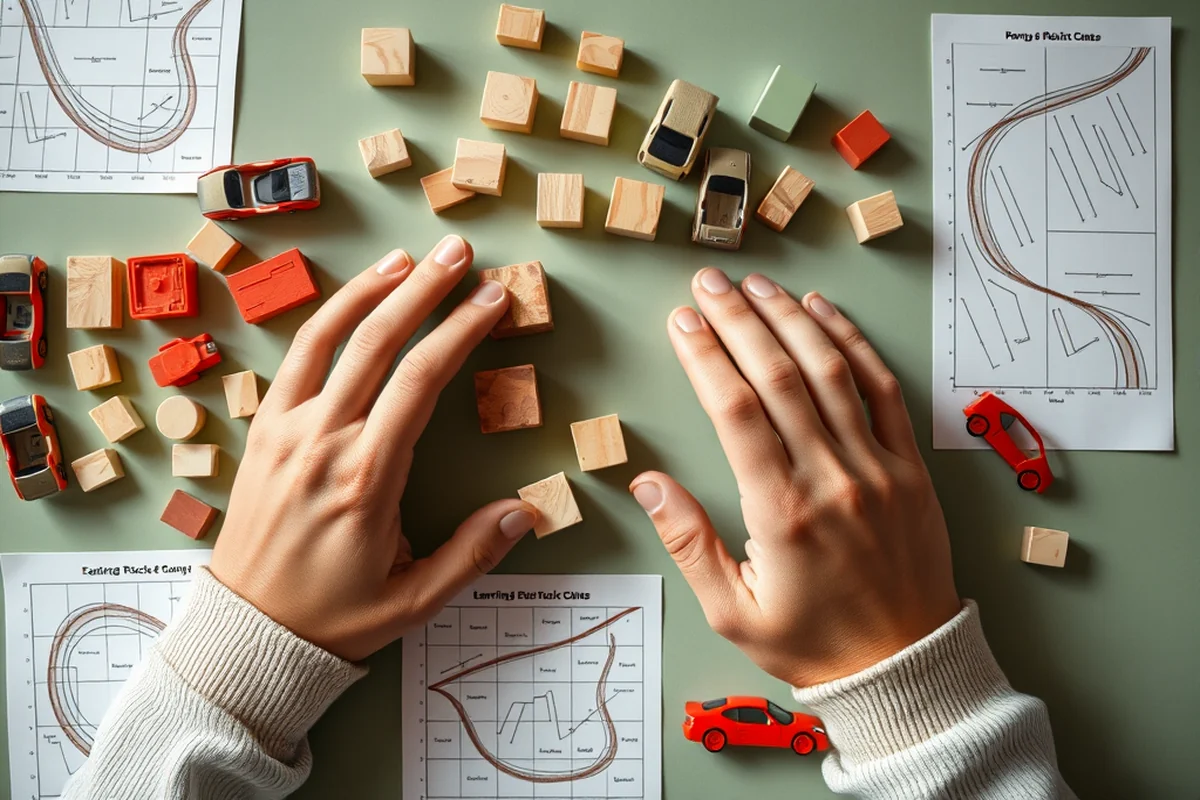
For younger kids (ages 3-5), the focus should be on exploration and observation. Let them roll the cars down the ramp, watch what happens, and ask simple questions like, 'What do you see?' or 'What happens if we change the ramp?'
For older kids (ages 6-8), you can introduce more variables, like changing the slope of the ramp, or asking them to measure how far the car travels. They can also start to make predictions based on previous experiments.
For even older kids (ages 9+), you can get more complex — using different materials to create roads, testing different car weights, or even introducing basic engineering challenges like building a bridge for the car to cross.
Related: Affordable learning games for kindergarten
Using Car Crash Games in the Classroom
In a classroom setting, car crash games can be used to teach physics, engineering, and even data collection. Kids can measure the distance the car travels, compare results from different ramps, and even create charts or graphs to track their findings.
I’ve used these games in a group setting where each child gets a turn to set up their own ramp and test their car. It’s a great way to encourage collaboration, communication, and critical thinking.
These games are also a great way to introduce scientific inquiry. Ask the kids to form hypotheses about what will happen, test them, and then analyze the results. It’s a simple but powerful way to introduce the scientific method.
Related: Diy learning games tips
Tips for Making the Most of the Game
One of the best ways to enhance learning is to encourage kids to reflect on what they’ve observed. After each experiment, ask them to describe what happened and why they think it happened. This helps reinforce their understanding of the concepts they’re exploring.
Another tip is to vary the materials and setups. Using different surfaces, ramps, and cars helps kids see how each change affects the outcome. This kind of experimentation is key to scientific thinking.
Also, don’t be afraid to let the kids take the lead. If they’re interested in a certain aspect of the game — like how to make the car go faster — follow their lead and explore that idea together.
Variation is the key to deeper learning in these games.
Related: Top learning games for kids
Extending the Learning Experience
Once kids are comfortable with the basics, you can introduce more complex variables. For example, you can test how different weights affect the speed of the car, or how the shape of the car influences how it moves.
You can also integrate measurement and math by asking kids to count how many times the car rolls down the ramp or measure the distance it travels. This helps reinforce math skills in a practical way.
Another extension is to explore different materials. How does a car move differently on a carpet compared to a wooden floor? What happens if you use a smoother or rougher surface? These are all great questions that lead to deeper learning.
Integrating Car Crash Games with STEM Curriculum
Integrating car crash games with STEM curriculum involves designing activities that align with science, technology, engineering, and math standards. For instance, students can calculate the force of impact using the formula F=ma, where a car’s mass and acceleration are measured. In one classroom, students used toy cars and ramps to test variables like speed and angle, recording data over 10 trials. This approach helped them grasp physics concepts while collecting and analyzing numerical data.[2]
To deepen the learning, teachers can incorporate technology by using motion sensors or video analysis software to track car movement. In a middle school experiment, students used free apps like Tracker to measure velocity and acceleration, comparing their results with theoretical calculations. This method not only reinforced math and physics skills but also taught data visualization and interpretation, with students spending about 45 minutes per activity on average.[3]
Engineering concepts can be introduced by challenging students to design safer cars using everyday materials. In one project, students built crash barriers from cardboard and foam, testing their effectiveness by crashing toy cars into them. The class spent two weeks on this project, culminating in a presentation where they explained their design choices and tested their barriers with a real crash simulation. This hands-on approach strengthened problem-solving and teamwork skills, with 85% of students reporting increased interest in engineering after the activity.[4]
👶 Baby Car Crashes
Use soft, lightweight cars and cushions for younger kids. Focus on rolling and observing, not crashing.
🏁 Ramp Racers
Introduce a race element by setting up multiple ramps and seeing which car goes the farthest.
🧱 No-Prep Crash Zone
Use a cardboard box and a few toy cars. Let kids build the setup on the floor — no tables or ramps needed.
👥 Group Crash Challenge
Divide kids into teams and challenge them to build the best ramp or car that can crash the farthest.
🔬 Science Extension
Add measuring tools, charts, and variables like weight or surface type to turn the game into a science experiment.
| The mistake | Why it happens | The fix |
|---|---|---|
| Not allowing enough time for exploration | Kids often need time to experiment and observe, and rushing them can prevent them from making meaningful discoveries. | Let the kids take their time. Encourage them to try multiple setups and reflect on what they see. |
| Focusing too much on the 'crash' rather than the learning | Sometimes the crash part becomes the focus, but the real learning is in the process of testing and observing. | Encourage reflection and discussion after each experiment — not just the crash. |
| Not varying materials or setups | Using the same materials every time can limit the learning potential of the game. | Introduce different surfaces, ramps, and cars to encourage more exploration and deeper thinking. |
| Not asking open-ended questions | Closed-ended questions can limit the depth of thinking and engagement. | Ask open-ended questions like, 'What do you think will happen if we change the ramp angle?' to encourage deeper thinking. |
Car Crash Games
Common Questions
What age is this game best for?
Do I need special materials for this game?
Can I do this game with a group of kids?
What are the learning objectives of this game?
References
- Chicken Game Theory Applied to Car-Pedestrian Interactions (blogs.cornell.edu)
- Try Not To Crash! (cs.wm.edu)
- New video game developed by engineering researchers teaches ... (cse.umn.edu)
- Get Convinced - Teen Driving Safety Program (ctr.utk.edu)
Cite this guide
Sneakylearn (2026). Car Crash Games. https://sneakylearn.com/car-crash-games/
Feel free to cite or share this guide.